


Atiku Kicks Against Proposed ₦50,000 WAEC, NECO Exam Charge
Former Vice President and African Democratic Congress (ADC) presidential candidate, Atiku Abubakar, has criticised the Federal Government over the proposed introduction of a uniform ₦50,000...


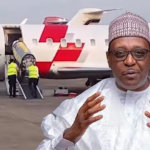
Former Vice President and African Democratic Congress (ADC) presidential candidate, Atiku Abubakar, has criticised the Federal Government over the proposed introduction of a uniform ₦50,000 examination fee for candidates sitting the West African Senior School Certificate Examination (WASSCE) and the National Examinations Council (NECO) examinations from 2027.

He warned that the policy, alongside the recent increase in fees at Federal Unity Colleges, could deny millions of Nigerian children access to education.
In a statement issued on Sunday by his Senior Special Assistant on Public Communication, Phrank Shaibu, Atiku described the measures as insensitive, arguing that they place additional financial pressure on families already struggling with inflation, high food prices, increased transportation costs, rising electricity tariffs and unemployment.
According to him, education should remain accessible to every Nigerian child and not become a privilege reserved for those who can afford it.
“A government that genuinely believes in the future of its people does not erect financial barriers between children and education. It removes them. Education is not a privilege reserved for the wealthy; it is the birthright of every Nigerian child,” he said.
The former Vice President noted that Nigeria already has one of the largest populations of out-of-school children globally, estimated at between 10.5 million and 15 million, warning that higher examination and school fees could worsen the situation.
He argued that the proposed ₦50,000 examination fee would particularly affect children from poor and middle-income families, many of whom already struggle to meet basic educational expenses.
Atiku also expressed concern that the new examination fee could further limit access to tertiary education, saying many academically qualified students may be unable to sit the qualifying examinations required for university admission.
He noted that although over two million candidates seek admission into tertiary institutions annually, public universities admit only between 500,000 and 700,000 students due to inadequate infrastructure.
The ADC chieftain questioned the government’s reliance on the Nigerian Education Loan Fund (NELFUND), arguing that student loans cannot address barriers preventing students from completing secondary education or sitting qualifying examinations.
According to him, meaningful education reforms should focus on making education affordable at the basic and secondary school levels, expanding university infrastructure, recruiting more teachers and ensuring that financial hardship does not prevent children from accessing education.
Atiku called on President Bola Tinubu to reverse the increase in Unity School fees, suspend the proposed ₦50,000 WAEC and NECO examination fee, and convene a stakeholders’ dialogue on sustainable funding for public education.

He also urged the Federal Government to increase investment in public schools, recruit more teachers, expand the capacity of tertiary institutions and ensure that no Nigerian child is denied education because of financial constraints.
The statement comes amid growing public debate over the rising cost of education, following recent increases in school-related charges and concerns about the broader cost-of-living crisis.
Although the Federal Government has introduced the Nigerian Education Loan Fund (NELFUND) to improve access to tertiary education, critics argue that affordability challenges begin much earlier in the education system, particularly at the secondary school level.
The proposed introduction of a ₦50,000 examination fee for WAEC and NECO candidates from 2027 has continued to generate reactions, with many stakeholders calling for clarification from the relevant authorities.





No Comment! Be the first one.