




FG Mandates 6-Year Lifespan for Textbooks in New Cost-Cutting Education Reform.
Nigerian federal authorities have activated a comprehensive policy framework targeting educational cost reduction for families, enhanced learning outcomes, and school sustainability through mandatory...

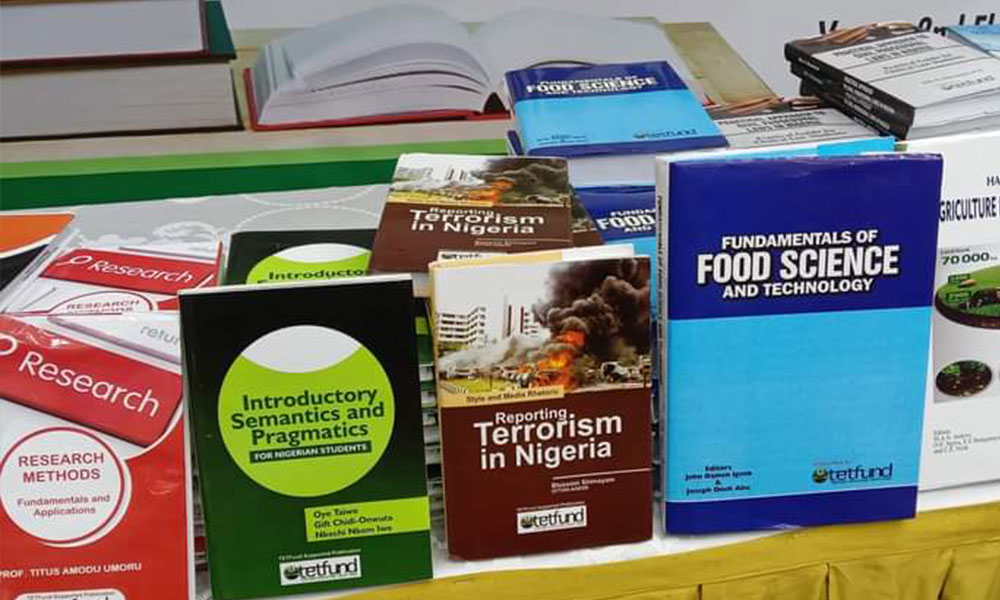
Nigerian federal authorities have activated a comprehensive policy framework targeting educational cost reduction for families, enhanced learning outcomes, and school sustainability through mandatory adoption of reusable, high-quality textbooks alongside reinforced quality assurance protocols.
The policy directive, jointly issued by Education Minister Dr. Maruf Alausa and Minister of State for Education Prof. Suwaiba Ahmad, represents a component of broader reforms repositioning Nigeria’s education sector while alleviating household financial pressures.
Ministry Director of Press and Public Relations Boriowo Folasade communicated the policy details through a Friday statement.
The ministers outlined that the framework prioritizes standardized, durable textbooks engineered for four-to-six-year operational lifespans, while explicitly prohibiting the practice of bundling disposable workbooks with textbooks in educational institutions.
The statement quoted the ministers as saying, “Our goal is to ensure that education is both qualitative and affordable.”
The officials elaborated on cost-reduction mechanisms. “By transitioning to durable, reusable textbooks, we are making it possible for siblings to share materials, significantly lowering recurring costs for parents and reducing waste within the school system,” they stated.
This methodology aims to enable learning material reuse across multiple academic sessions, simultaneously advancing environmental sustainability objectives.
Within broader sector reforms, the ministers noted that federal authorities have instituted a uniform academic calendar promoting consistency in instructional delivery, learning processes, and institutional planning nationwide.
Additionally, graduation ceremonies have undergone streamlining to mitigate unnecessary financial burdens on parents.
The statement further said, “Under the new guidelines, only pupils and students completing Primary 6, Junior Secondary School 3 (JSS3), and Senior Secondary School 3 (SSS3) are permitted to hold graduation ceremonies.”
The ministers provided rationale for ceremony restrictions. “We must distinguish between milestones and routine transitions. By limiting formal graduations to exit classes, we are protecting parents from the frequent, high-cost celebrations that have become a burden rather than a joy,” they explained.
The ministers emphasized that the policy strengthens assessment, quality assurance, selection, and utilization protocols for textbooks and instructional materials nationwide.
The reforms address longstanding concerns regarding frequent yet cosmetic textbook revisions and inadequate quality standards.
“We are putting an end to the era of frequent but superficial revisions that compel parents to purchase new books annually without any real improvement in learning outcomes,” the ministers stated.
They continued: “Nigerian students deserve instructional materials that meet international standards of quality and longevity.”
A fundamental policy provision introduces structured and meaningful revision cycles. Under the framework, textbook revisions must demonstrate substantive content improvements rather than minor layout or pagination modifications, thereby extending approved textbook lifespans and ensuring enhanced value proposition.
The ministers highlighted that the policy establishes limits on approved textbooks per subject and grade level, aligning with international best practices observed in countries such as Japan, Kenya, and Tanzania.
“This measure is expected to improve quality, reduce market saturation, and simplify textbook selection processes for schools and education authorities,” the ministers added.
The Nigerian Educational Research and Development Council will maintain central responsibility for instructional material assessment and quality assurance, collaborating closely with relevant education agencies to ensure exclusively high-quality, curriculum-aligned textbooks receive approval for nationwide school use.
The Federal Ministry of Education reaffirmed commitment to education renewal and reform while commending the Universal Basic Education Commission, NERDC, and other technical partners for contributions to the policy framework development.
The ministers concluded by reaffirming Federal Government resolve to safeguard educational standards, promote equity, and ensure Nigerian learners access high-quality instructional materials supporting effective teaching and learning outcomes.
The policy responds to systematic erosion of Nigeria’s traditional “hand-me-down” textbook culture, where families historically preserved books for passage from older to younger siblings—a practice that significantly reduced household financial burdens.
This sustainable tradition has deteriorated over the past decade through proliferation of integrated workbooks featuring “disposable” designs requiring students to write directly in texts, rendering materials unusable for subsequent learners.
Economic strain intensified through frequent, often superficial revisions where minor layout or pagination changes are marketed as mandatory new editions.
Additionally, school monopolies—particularly prevalent in private education sectors—have compelled parents to purchase materials exclusively through institutions at inflated prices, necessitating federal intervention to restore affordability and practical approaches to the education system.
The textbook lifespan extension and workbook bundling prohibition directly challenge publisher business models that have profited from forced annual replacements, potentially generating industry resistance while promising substantial household savings if enforcement proves effective across Nigeria’s diverse public and private school landscape.






No Comment! Be the first one.