





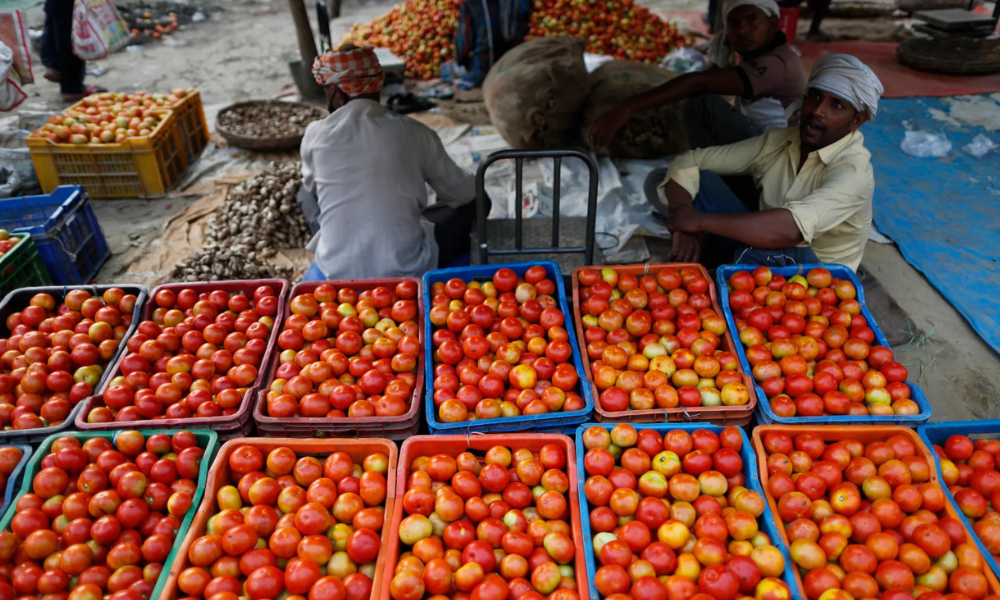
The Tomatoes and Orchard Producers Association of Nigeria (TOOPAN) has assured Nigerians that the soaring cost of tomatoes is expected to decline significantly by October 2026 as fresh harvests enter markets across the country.
TOOPAN President Mr. Oyeleke Bola said the current supply of tomatoes remains insufficient to meet demand from households and processing industries, contributing to the high prices currently experienced nationwide.
According to him, October marks the next major harvest season, which is expected to boost supply and stabilize prices.
“We will be looking at October 2026; prices will crash by that time. October is going to be the next harvesting month, and there will be huge harvests because many farmers will be bringing their tomatoes to the market. Once supply increases, prices will naturally come down,” Bola said.
He explained that large-scale harvests are expected from key tomato-producing states, including Jos, Kaduna, Kano and Gombe, as well as parts of the South-West such as Ogun, Ondo, Oyo, and the Badagry and Epe areas of Lagos State.
Bola praised the efforts of small-scale farmers and appealed to Nigerians for patience, noting that stakeholders across the value chain are working to improve production and market availability.
“Our farmers are working very hard. Nigerians should be patient with us as we continue efforts to solve these challenges together,” he added.
The TOOPAN president noted that many farmers currently achieve yields ranging from 20 to 35 tonnes per hectare, depending on location and farming practices.
Despite Nigeria’s position as the second-largest tomato producer in Africa after Egypt, with annual production estimated between 1.8 million and 2.3 million metric tonnes, the sector continues to face significant challenges.
Bola attributed the recent price surge to several factors, including the rising cost of farm inputs, insecurity in farming communities, expensive seeds, limited access to finance, and increased fertilizer costs.
He also highlighted the impact of global economic developments on agricultural inputs, noting that fertilizer import costs have risen, making production more expensive for farmers.
To address these challenges, TOOPAN said it is partnering with seed companies and fertilizer manufacturers to make inputs more affordable while providing farmers with training on modern agronomic practices aimed at boosting productivity.
The association expressed optimism that these interventions, combined with the upcoming harvest season, will improve tomato availability and bring relief to consumers across the country.





No Comment! Be the first one.