


FG, ASUU seal long-awaited pact with 40% salary increase, new allowance for professors
The Federal Government and the Academic Staff Union of Universities (ASUU) have struck a far-reaching agreement expected to reset labour relations in Nigeria’s university system, providing for a 40...

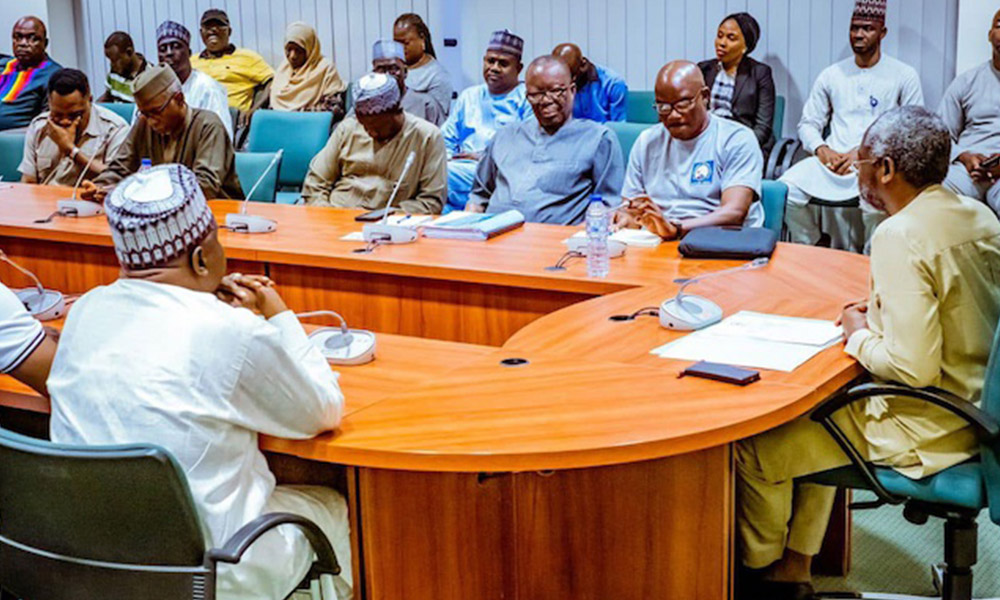
The Federal Government and the Academic Staff Union of Universities (ASUU) have struck a far-reaching agreement expected to reset labour relations in Nigeria’s university system, providing for a 40 per cent pay rise for lecturers and the introduction of a new monthly allowance exceeding ₦140,000 for professors.
The agreement, concluded in Abuja on Wednesday, resolves a 16-year impasse over the renegotiation of the 2009 FG–ASUU agreement and is being framed as a major step toward improving staff welfare, stabilising academic calendars and strengthening public universities.
Under the terms of the 2025 deal, academic staff salaries will rise by 40 per cent from January 1, 2026. The revised pay structure combines the Consolidated University Academic Staff Salary with a newly introduced Consolidated Academic Tools Allowance, meant to support essential academic work such as research, journal publications, conference attendance, internet access and book purchases.
One of the most notable provisions is the creation of a Professorial Cadre Allowance, introduced for the first time. The allowance sets annual earnings for full professors at ₦1.74 million, translating to more than ₦140,000 monthly, while readers will receive ₦840,000 per year.
Presenting the agreement, the Minister of Education, Dr Tunji Alausa, described the outcome as a landmark achievement that reflects President Bola Tinubu’s commitment to improved lecturer welfare and uninterrupted academic calendars in federal universities.
Earlier, during an appearance on Channels Television’s Politics Today, Alausa said the Federal Government had already secured the funds required to implement all components of the agreement, including the salary increase and the restructuring of nine Earned Academic Allowances.
“A professor will now receive a monthly top-up of over ₦140,000. President Tinubu has created a new category of allowance for academic staff — the professorial cadre allowance — as an enhanced additional package,” the minister said.
“Today, we have the funding to support the 40 per cent salary increase granted to lecturers across all tertiary institutions, as well as the nine enhanced Earned Academic Allowances, which are now clearly structured.”
According to the minister, the Earned Academic Allowances have been redesigned to ensure transparency and equity, with payments linked strictly to verifiable academic responsibilities such as postgraduate supervision, fieldwork, clinical duties, examinations and leadership roles.
He added that implementation was already underway, noting that the official circular authorising the welfare components of the agreement was issued in December following consultations between the President and the National Salaries, Incomes and Wages Commission.
“When we were negotiating, the President made it clear that he would not approve an agreement he could not implement. Once he was convinced that the funding was available, he gave his approval,” Alausa said.
Describing the pact as more than a contractual document, the minister said it represents “a renewed trust, restored confidence and a decisive turning point in the history of Nigeria’s tertiary education system.”
Negotiations to review the 2009 agreement began in 2017 but stalled under successive administrations, despite efforts by committees led by Wale Babalakin, Munzali Jibrin and Nimi Briggs. Progress was eventually achieved under the current administration following the inauguration of the Yayale Ahmed-led committee in October 2024, culminating in the agreement roughly 14 months later.
Beyond remuneration, the deal also touches on broader reforms, including increased funding, university autonomy, academic freedom and strategies to curb brain drain while repositioning universities for national development.
Reacting to the development, ASUU President Prof. Chris Piwuna welcomed the agreement but warned that deep-seated structural, governance and socio-economic issues still pose risks to the long-term stability of the university system.
He attributed the prolonged delay in concluding the renegotiation to what he called a “poverty of sincerity” on the part of previous governments.
“The 2009 agreement was due for renegotiation after three years, but it dragged on for over a decade because of lack of genuine commitment,” Piwuna said.
While acknowledging the significance of the deal, ASUU maintained that unresolved challenges remain, including government interference in university autonomy, weak accountability in university administration, poor research funding and declining academic standards.
Piwuna also criticised the frequent dissolution of governing councils and alleged political interference in vice-chancellor appointments, warning that such practices undermine merit and fuel internal crises.
“Such interventions erode meritocracy and create legitimacy crises, leading to internal conflicts, litigation and staff polarisation,” he said.
On research funding, ASUU said that although provisions exist within the agreement, their effectiveness would depend on implementation. The union called on the National Assembly to urgently pass the National Research Council Bill, which proposes allocating at least one per cent of GDP to research, innovation and development.
ASUU further expressed concern over falling academic standards in newly established federal universities converted from colleges of education, cautioning against the elevation of chief lecturers to professorial ranks without due process.
Linking the success of the agreement to broader economic realities, the union pointed to challenges such as fuel subsidy removal, naira devaluation, rising living costs, insecurity and shrinking real wages.
“The country is in dire straits and propaganda is not the option. Nigeria must be rescued and rebuilt in the interest of the people,” Piwuna said.
Despite its cautious optimism, ASUU said it expects full implementation of the agreement without recourse to strike action, noting that past experiences have made the union wary of unfulfilled promises.






No Comment! Be the first one.