



University Leader Advocates Tax Exemptions for Education Sector, Warns of Access Barriers
Prof. Bode Ayorinde, Pro-Chancellor of Achievers University in Owo, Ondo State, has issued an urgent appeal to federal authorities demanding tax exemptions for universities and educational...

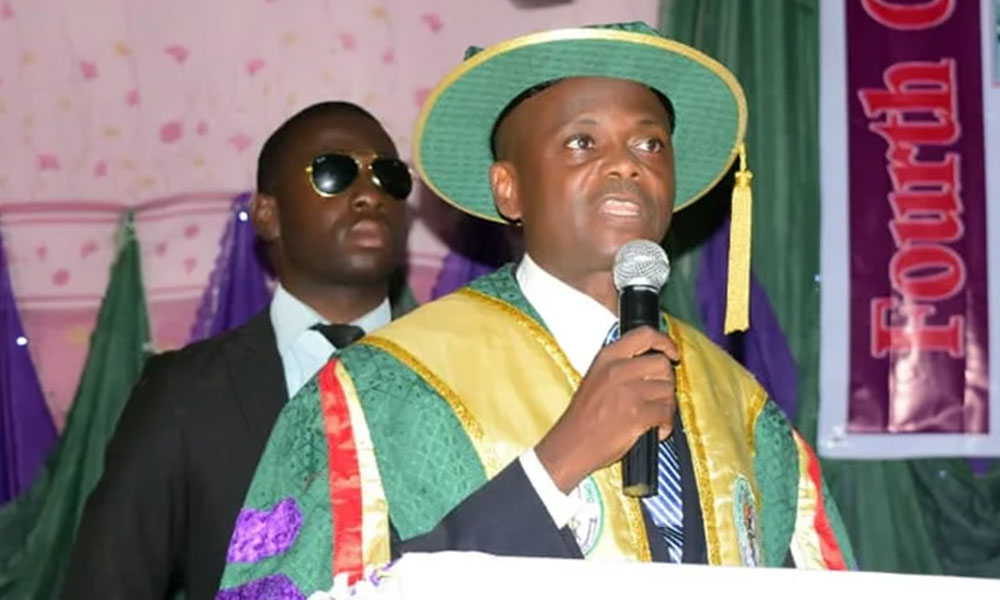
Prof. Bode Ayorinde, Pro-Chancellor of Achievers University in Owo, Ondo State, has issued an urgent appeal to federal authorities demanding tax exemptions for universities and educational institutions, contending that education requires governmental support and subsidization rather than commercial treatment and revenue extraction.
Ayorinde articulated his position during the institution’s 15th convocation ceremony, cautioning that cumulative tax burdens imposed on educational establishments are constraining quality education access while simultaneously undermining broader national development objectives.
Delivering a lecture titled ‘Rethinking taxation in the education sector: Why educational institutions should not be taxed,’ Ayorinde catalogued multiple levies afflicting universities, including company income tax, Value Added Tax, education tax, development levy, billboard and radio taxes, alongside personal income tax assessments on proprietors.
The Pro-Chancellor explained that these combined fiscal obligations consume upwards of 40 percent of tuition revenues that taxation authorities categorize as institutional earnings, designating educational establishments as commercial ‘companies.’
“What are we producing? Education is not merely a social service; it is an investment in human capital. Nations that have made deliberate efforts to nurture their educational systems have reaped abundantly in productivity, innovation and economic growth,” he said.
Ayorinde advanced the position that education should never face taxation under any circumstances, asserting it warrants governmental support, subsidization and incentivization as a vital sector for national transformation.
“Education is a public good, not a business enterprise to be taxed. Private universities in Nigeria are not established for profit-making in the commercial sense, but to complement government efforts and help close the admission gap,” he said.
According to Ayorinde, taxation of educational institutions could compel universities to eliminate scholarship programs, terminate free-tuition initiatives and escalate fees, consequently denying numerous qualified students educational opportunities.
“President Bola Tinubu and the National Assembly should please be informed and guided that an attempt to impose taxes on educational institutions is to tax knowledge, enlightenment, opportunities, and the future of young Nigerians,” he said, characterizing such fiscal policy as “counter-productive and contrary to global best practices.”
Ayorinde petitioned federal authorities to implement immediate policy reforms, specifically recommending that government direct the Federal Inland Revenue Service and various state boards of internal revenue to grant comprehensive tax exemptions to all educational institutions, with particular emphasis on universities.
He stressed that universities merit global recognition as development partners rather than classification as revenue-generating entities subject to commercial taxation frameworks.
Addressing graduating students, Ayorinde encouraged them to serve as worthy institutional ambassadors while avoiding social vices, including drug abuse.
“Achievers University has equipped you with knowledge and character. May you rise as leaders with integrity, who will make your families proud and help build the prosperous Nigeria we all dream of,” he said.
The taxation debate reflects broader tensions within Nigerian higher education regarding the financial sustainability of private universities operating under mission-driven rather than profit-oriented models. Private institutions argue they provide public benefit by expanding access beyond government university capacity limitations while receiving minimal governmental support compared to public institutions.
However, revenue authorities maintain that private universities operate as corporate entities utilizing commercial infrastructure, generating income, and benefiting from public services that taxation funds—justifying their inclusion within general taxation frameworks despite educational missions.
The fundamental disagreement centers on whether education constitutes a public good warranting categorical tax exemption regardless of institutional ownership structure, or whether private educational enterprises should contribute to national revenue proportionate to their economic activities and commercial characteristics.
For Nigerian policymakers, the question carries significant implications: tax exemptions could enhance educational accessibility and affordability while potentially reducing government revenue and creating precedents for other sectors claiming public benefit status. Conversely, maintaining taxation sustains revenue streams but may constrain educational expansion and increase costs transferred to students and families.





No Comment! Be the first one.