



Rights Group Warns Rivers Assembly: Impeachment Push Violates Constitutional Order, Threatens Democracy
A civil society organization has issued a strong warning against what it describes as an unconstitutional attempt to remove Rivers State's top leadership, cautioning that ongoing impeachment...

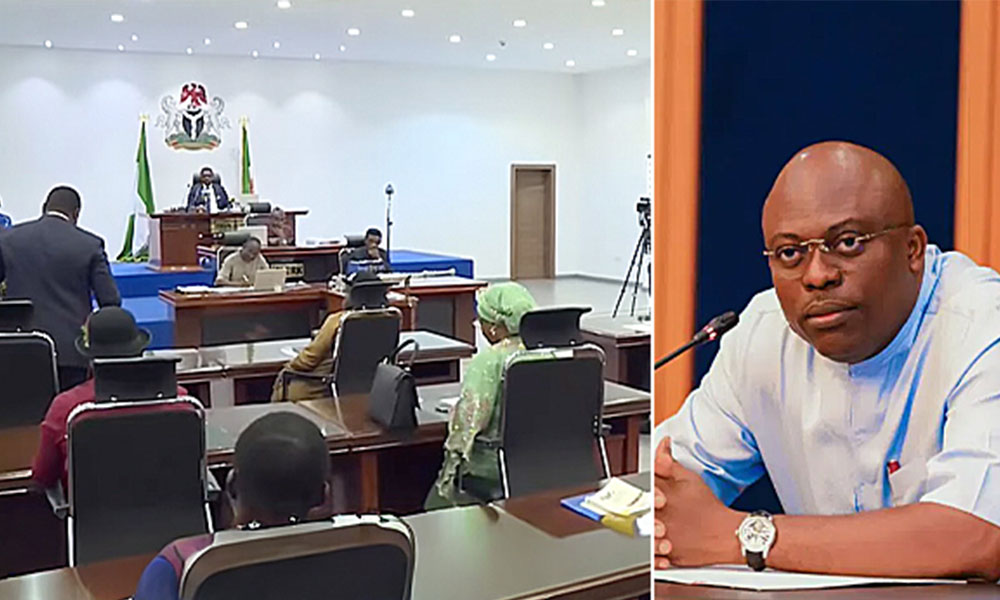
A civil society organization has issued a strong warning against what it describes as an unconstitutional attempt to remove Rivers State’s top leadership, cautioning that ongoing impeachment proceedings against Governor Sir Siminalayi Fubara and Deputy Governor Prof. Ngozi Nma Odu represent a dangerous abuse of legislative authority.
The International Society for Social Justice and Human Rights (ISSJHR), speaking through its Chancellor Omenazu Jackson in Port Harcourt, has characterized the impeachment initiative as fundamentally anti-democratic, constitutionally reckless and a clear abuse of legislative powers—while putting Rivers State House of Assembly members on notice that public restraint should not be interpreted as vulnerability.
At the center of ISSJHR’s criticism is the assertion that the impeachment process appears disconnected from constitutional requirements and genuine democratic principles. Jackson outlined specific constitutional violations he believes are occurring, pointing to mandatory legal frameworks that govern removal of elected executives.

The organization’s position emphasizes that impeachment mechanisms exist within strict legal boundaries rather than serving as instruments of political warfare. Jackson specifically referenced Section 188 of the 1999 Constitution (as amended), which requires proven allegations of gross misconduct and full compliance with due process.
“The Constitution requires clear allegations of gross misconduct, due process, fair hearing, legislative quorum, judicial panel investigation and strict procedural compliance. Any deviation renders such impeachment null, void and unconstitutional,” he said.
Beyond procedural concerns, ISSJHR’s statement delves into fundamental constitutional principles regarding governmental structure. Jackson invoked Sections 4, 5 and 6 of the Constitution, which establish the doctrine of separation of powers, highlighting that Nigeria’s constitutional framework explicitly prevents any governmental branch from dominating others.
“The legislature cannot lawfully intimidate or harass the executive into surrendering its constitutional mandate or policy direction outside the confines of the law,” Jackson added.
The rights organization called for de-escalation, urging both executive and legislative branches to demonstrate constitutional fidelity and restraint. Jackson emphasized that inter-governmental harmony remains crucial for effective governance, sustainable peace and developmental progress across Rivers State.
However, while advocating for constitutional processes, ISSJHR made clear that legitimate governance must be protected from what it views as illegitimate pressure tactics. Jackson issued a pointed warning that attempts to force Governor Fubara into decisions contrary to voter interests would face legal opposition.
“The governor of Rivers State cannot be coerced or intimidated into acting against the overall interest of the electorate, as his mandate flows directly from the people,” he said.
Central to the organization’s argument is the principle of popular sovereignty—the notion that governmental authority derives from citizens rather than political maneuvering. ISSJHR maintains that impeachment proceedings lacking genuine public support undermine democratic legitimacy itself.
The group directed particularly harsh language toward what Jackson termed crisis merchants, political opportunists and constitutional saboteurs, calling on such actors to abandon efforts that could destabilize the state.
“They must be mindful of the lawful resistance of an electorate whose socioeconomic existence is threatened by this ill-conceived, vindictive and illegitimate impeachment attempt,” Jackson warned.
In his concluding remarks, Jackson made explicit that citizens retain constitutional rights to defend democratic governance through legal channels. Any removal attempt bypassing constitutional provisions, he stated, would be stoutly and lawfully resisted by the people using all democratic and legal means available within Nigeria’s constitutional framework.
The statement represents the latest intervention in Rivers State’s escalating political tensions, with civil society groups increasingly vocal about perceived threats to democratic norms and constitutional governance in the oil-rich state.




No Comment! Be the first one.